Belgian Constitutional Court Upholds Abortion Law
In its judgment of 24 September 2020, the Belgian Constitutional Court declared the current law on voluntary termination of pregnancy, as revised in October 2018, to be in conformity with the Constitution and fundamental rights. The Court rejected all seven grounds for appeal lodged by the applicants.
In April 2019, the association "Citoyens pour la vie / Burgers voor het leven" had brought the matter before the Court, challenging the constitutionality of the new law. The following is a summary of the arguments of the objectors and the Court's responses.
Arguments Regarding the Legal Status of Unborn Children
One of the key arguments raised by the applicants concerned the legal basis for the protection of unborn children. They contended that both Article 2.1 of the European Convention on Human Rights (ECHR), as interpreted by the Court of Cassation on 22/12/1992, and the Convention on the Rights of the Child provide a legal foundation for this protection. The Convention on the Rights of the Child defines a child as "every human being below the age of eighteen years" and its Preamble calls for special and legal protection for every child "both before and after birth".
From the Court's reasoning, it can be inferred that the highest judicial authority is not prepared to grant the unborn child legal personality from the moment of conception. The Court's selective approach to these legal provisions was a point of contention.

Eugenics and Abortion
The second ground for appeal addressed the alleged violation of the prohibition of eugenic practices. The Court ruled that the law in question does not have an eugenic character and does not introduce a system that "organizes the selection of people," even though it permits abortion in certain cases due to disability or serious illness.
The Court rejected the assertion that the law is characterized by organized or even imposed state eugenics. However, it did not deny the existence of certain forms of so-called "liberal" eugenics, implying that individuals in society are free to select or not select people based on their pathological characteristics.
Conscience Rights of Medical Professionals
The Court argued that a doctor, by invoking freedom of conscience, cannot deny a woman who meets the legal conditions for an abortion the right to quality medical care. However, questions arise as to whether the referral obligation undermines the right to conscientious objection and the legal guarantee that no one can be forced to participate in an abortion. Critics suggest that the law indirectly compels doctors to participate in a medical procedure to which they fundamentally object.
In this context, it is noteworthy that the Court did not address the potential violation of two constitutional articles: Article 11, which states that the law should protect ideological and philosophical minorities, and Article 19, which stipulates that freedom of expression may only be restricted for the punishment of offenses. Fundamentally, these are two conflicting rights, one of which is constitutionally guaranteed, while the other is established by ordinary law. Furthermore, the Court did not explain how, in the internet age, medical assistance is compromised by the mere fact that a woman is informed at the initial contact that she must find another doctor.
Discrimination Against Pharmacists
The fourth ground for appeal concerned the alleged discrimination against pharmacists. It was argued that when requested to dispense abortifacient drugs, their freedom of conscience is not protected in the same way as that of other healthcare professionals mentioned in the law.
The Court ruled that the conscience clause of the law in question cannot apply to pharmacists because they do not perform a medical act. Additionally, the Court stated that pharmacists have their own conscience clause, which is contained in Article 35 of the Code of Pharmaceutical Ethics. This latter argument is significant, as a referral obligation for pharmacists asked to dispense abortifacient drugs remains contested. In any case, an ethical code never offers the same safeguards to pharmacists as a law granting them a right to conscientious objection.
Freedom of Expression and Prevention of Abortion
The fifth legal remedy addressed the alleged violation of freedom of expression of individuals who attempt to prevent a woman from undergoing an abortion. The Court reasoned that "the contested article does not punish the person who tries to convince a woman not to proceed with a pregnancy termination." This clarification is important in light of new legislative proposals that aim to broaden the so-called 'obstruction offense' to include prevention by any means.
Abortion Advertising and Public Health
In their sixth ground for appeal, the applicants argued that the abolition of the ban on advertising abortifacient drugs poses a serious threat to the right to life. The Court first noted that it has not been demonstrated that such advertising will lead to an increase in the number of abortions. It then ruled that the lifting of the ban "aims to provide women with quality information and not to advertise drugs in the commercial and mercantile sense of the word."
Balancing Rights and Interests
The Court rejected the legal remedy as unfounded, referring to parliamentary proceedings that demonstrate that "the legislator, with the contested law, has sought a balance between, on the one hand, the fundamental rights of pregnant women and, on the other hand, the ethical concerns that a state must guarantee." The Court did not explain how the legislator balances the interests of the unborn child in the absence of recognized rights.
US Supreme Court and the Future of Rights
The question of whether entrepreneurs in the US can refuse services to customers based on their sexual orientation is currently before the Supreme Court. This case is being closely watched, as progressive Americans fear that other established rights may be reversed following the conservative court's abolition of the right to abortion.
The case before the Supreme Court was initiated by a web designer from Colorado. She argues that the law violates the First Amendment of the US Constitution, which protects freedom of speech and religion. The Supreme Court is the highest court in the United States and rules on the constitutionality of laws in individual states. It decides on highly sensitive and politically charged matters.
The Supreme Court is currently very conservative. Former President Donald Trump appointed three new justices during his term, resulting in six of the nine justices being conservative and three progressive. The Court is once again facing a case where freedom of religion and freedom of speech are pitted against anti-discrimination and the protection of minorities.
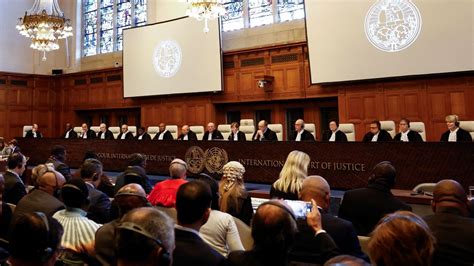
Freedom of Speech vs. Anti-Discrimination
The central question is when the refusal to provide a service becomes unlawful. During the initial hearing, it appeared that the conservative majority might agree with the web designer's argument. However, progressive judges warn that if this reasoning is applied broadly, it could open the door to far-reaching discrimination.
"If the court sides with the web designer, it would be the first time judges say that a commercial business serving the public could refuse a customer based on race, sex, religion, or sexual orientation," said Justice Sonia Sotomayor.
A ruling is not expected until June, but the case is being closely monitored. Since the Supreme Court abolished the right to abortion a few months ago, many progressive Americans fear that other important rulings will be overturned. Conservative Justice Clarence Thomas had also alluded to this possibility in the abortion ruling.
Protection of Same-Sex Marriage
Concerns are particularly high regarding the right to same-sex marriage. A bill protecting same-sex marriage, as well as interracial marriage, was recently approved by the Senate. The original bill was amended to state that religious organizations are not required to provide services for same-sex wedding ceremonies. After the amendment, the proposal returned to the House of Representatives, which had already approved the initial version in July. The vote on the final proposal is expected to be a formality.
Same-sex couples have had the right to marry nationwide in the United States since 2015, following the landmark Supreme Court decision in Obergefell v. Hodges. Prior to this case, same-sex marriage was recognized in 37 states. The federal law does not compel any US state to perform same-sex marriages but requires states to recognize all marriages legally contracted in another state.
Global Perspectives on Abortion Rights
Although the Christian church has always disapproved of abortion, strict legal persecution of the practice only began in the 19th century. Practices and legislation vary greatly by country today, with no single international norm dictating whether abortion should be permitted or prohibited.
Amnesty International's Stance on Abortion
In 2020, Amnesty International updated its policy on abortion. The organization recognizes the right of every pregnant person to abortion in a manner that respects their rights, autonomy, dignity, and needs. Therefore, Amnesty calls for the full decriminalization of abortion, meaning its removal from criminal laws, other legislation, policies, and practices. Amnesty also advocates for universal access to abortion, as well as post-abortion care and evidence-based information.
According to international human rights law, everyone has the right to life and health, and the right to be free from violence, torture, or cruel treatment. Human rights dictate that decisions about one's body are solely one's own. Coercion, let alone violence, is prohibited, and criminalizing abortion constitutes a violation of human rights. Forcing someone to carry an unwanted pregnancy to term violates the right to privacy and bodily autonomy. Likewise, no one should be forced to undergo an abortion.
In line with United Nations pronouncements, Amnesty maintains that the right to life begins at birth. The decision about an abortion is almost always difficult and not taken lightly. Unsafe abortions are a leading cause of death for pregnant individuals worldwide. According to the World Health Organization (WHO), 25 million unsafe abortions occur annually, the vast majority in developing countries.
When governments restrict access to abortion, people are forced to resort to clandestine, unsafe procedures. Those who cannot afford to travel or seek private care are disproportionately affected. In countries with limited legalization of abortion, the law typically allows for exceptions to criminalizing legislation, such as when pregnancy results from rape or incest, in cases of severe and fatal fetal defects, or when there is a risk to the life or health of the pregnant person.
Despite a global trend towards reforming laws to prevent deaths, some countries, including Nicaragua and El Salvador, maintain draconian and discriminatory laws that still prohibit abortion under almost all circumstances. In other countries, activism seeks to curtail previously established abortion rights. In 2022, the US Supreme Court overturned the nationwide right to abortion established by Roe v. Wade, a significant setback for gender equality.
Abortion Legislation in the Netherlands and Europe
In the Netherlands, the abortion rate is relatively low: 8.5 per 1,000 women aged 15 to 44. The majority of these women, about 80 percent, are less than eight weeks pregnant at the time of the abortion. Abortions are not performed after 20 weeks of pregnancy.
Over the past sixty years, more than thirty countries have amended their laws. As of 2023, it is possible to obtain an abortion in 75 countries, often after a reflection period and typically no later than 12 weeks of pregnancy. In most European countries, abortion is legal under certain conditions and practically accessible. However, Poland, for example, has strict abortion legislation. In Ireland, a long-awaited referendum in 2018 resulted in a large majority in favor of repealing the constitutional ban on abortion.
The admissibility of abortion as a reproductive right is a contentious issue worldwide. The UN Committee on the Elimination of All Forms of Discrimination against Women (CEDAW) has consistently stated that restrictive abortion laws constitute discrimination against women. In 2018, the UN Committee noted proposals to extend the right to life, as enshrined in the UN Covenant on Civil and Political Rights, to the unborn, but did not adopt these proposals, thus affirming that the right to life begins at birth.
In 2018, the UN Human Rights Committee issued a statement on abortion and the right to life, asserting that states may regulate voluntary abortion but cannot criminalize pregnancies, for instance, by targeting unmarried women or imposing criminal sanctions on women and girls undergoing abortions or on medical professionals assisting them.
Inclusivity in Reproductive Healthcare
Not only cisgender women and girls may require access to abortion services, but also intersex individuals, trans men and boys, and people of other gender identities who can become pregnant. One of the main barriers to accessing abortion for these individuals and groups is the lack of access to healthcare. Furthermore, those who do have access to healthcare may face stigmatization and bias in the provision of medical services.
A significant percentage of trans and non-binary individuals report experiencing harassment in medical settings, and a considerable number report being denied medical care due to their gender identity. These figures are even higher among people of color, reflecting the intersectional discrimination stemming from intertwined factors of poverty and race. Individuals may belong to multiple marginalized groups simultaneously, experiencing a unique form of discrimination.
Advocates for sexual and reproductive rights and LGBTQ+ activists are campaigning to raise awareness about these issues, emphasizing the need for abortion services to be available, accessible, and inclusive.
Legislative Proposals in the Netherlands
The current situation in the United States, where the right to abortion is under threat, contrasts with the ongoing protests in the Netherlands. While these protests may not change the US Supreme Court's decision, they serve to signal that there are Dutch citizens who would strongly oppose similar developments in their own country.
To prevent such scenarios, legislative action is proposed. Two options are considered: ordinary formal legislation and a revision of the Constitution.
Option 1: Amending Existing Legislation
The first option involves amending the existing Wet afbreking zwangerschap (Abortion Act). A more significant improvement would be to remove violations of the act's provisions by doctors from the criminal code, thereby preventing the Public Prosecution Service from attempting to make the application of the law stricter through (test) cases.
Option 2: Constitutional Protection
The second, more fundamental option, is to enshrine the right to abortion in the Constitution. This could involve adding a second paragraph to Article 11 of the Constitution, which currently states: "Everyone has the right to the inviolability of his body, subject to such limitations as may be prescribed by law."
A proposed new second paragraph could establish the right to self-determination, potentially including not only the right to abortion but also the right to euthanasia, as both relate to the human body and the life it carries. The proposed text reads:
"Paragraph 2: Everyone has the right to control their own body and their own life, and the life that someone carries as a result of a pregnancy, subject to limitations that may be prescribed by law and that are appropriate and necessary for achieving a legitimate aim."
This provision would be fully effective if the prohibition of judicial review of the constitutionality of laws, as stipulated in Article 120 of the Constitution, were repealed. Even without this repeal, it would become very difficult to revoke or amend the current Abortion Act and the Act on Request-Based Termination of Life and Assisted Suicide to the detriment of the right to self-determination. The addition "that are appropriate and necessary for achieving a legitimate aim," derived from European case law, would immediately provide a safeguard against overly far-reaching limitations by general administrative order.
Deliberations on the most desirable wording can commence promptly to ensure this proposal, or a similar one, gains "constitutional maturity."

Protecting Same-Sex Marriage in the Constitution
Anticipating concerns about the right to same-sex marriage being jeopardized, it is also proposed that this right be anchored in the Constitution. This could be achieved by adding a new fourth paragraph to Article 10 of the Constitution, which deals with the right to privacy:
"Paragraph 4: Everyone has the right to respect for their family and private life, subject to such limitations as may be prescribed by law and that are appropriate and necessary for achieving a legitimate aim. This right includes the right of anyone, including persons of the same sex, to enter into a marriage or partnership."
While the wording can be refined, the principle underlying this proposal is widely accepted in society and merits codification in the Constitution. The argument that the Dutch Constitution is concise should not outweigh the improvement of its protective function.